
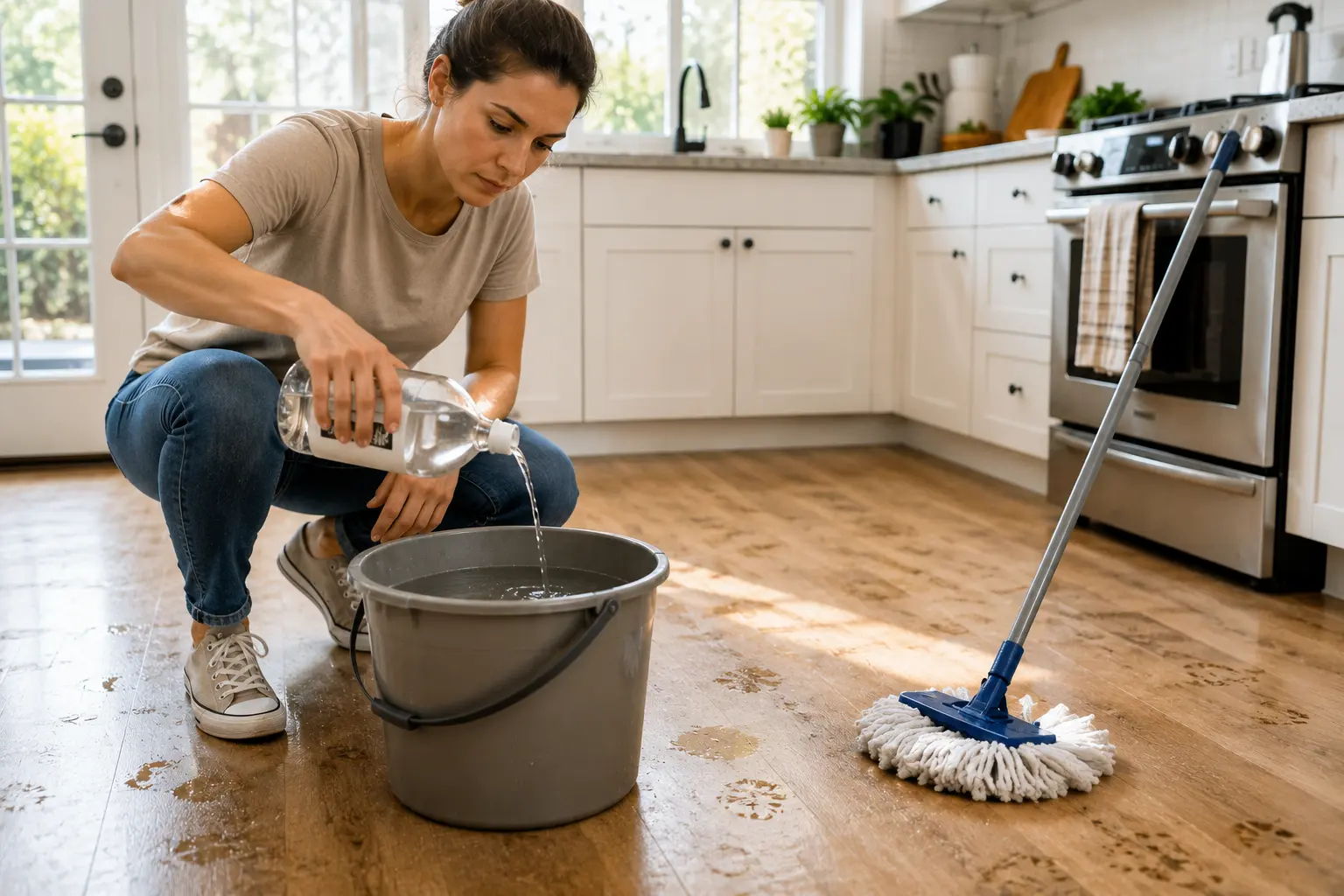
White vinegar has been sitting in kitchen cupboards for decades. Most people use it for cooking. Some use it in salad dressings. Others barely think about it at all. So when homeowners started sharing videos of themselves pouring white vinegar into buckets of mop water, viewers had the same question. Why? After all, floors already have dozens of cleaning products specifically designed for them. Why reach for something that belongs in the pantry?
The answer has everything to do with a problem many people encounter every single day. Floors can look clean while still feeling dirty. Footprints. Pet odors. Sticky spots. Invisible residue left behind by ordinary cleaning products. Over time, many cleaners can actually leave a thin film on the floor, attracting even more dirt. That’s why some homeowners have started looking for a simpler alternative.
And surprisingly, one of the most popular solutions may already be sitting in your kitchen cabinet.
The method itself couldn’t be much simpler. Most people add a small amount of white vinegar to a bucket of warm water before mopping their floors as usual. That’s it. No complicated equipment. No expensive specialty products. Just a simple mixture that many people claim leaves floors feeling cleaner than traditional cleaners. One reason the trick has become so popular is because vinegar naturally helps break down grime, grease, and mineral buildup.
It can also help remove residue left behind by other cleaning products. As the mop passes across the floor, many people notice something interesting. Instead of feeling slightly sticky after drying, the surface often feels smooth and refreshed. And because vinegar evaporates quickly, it usually leaves behind fewer streaks than some commercial floor cleaners. But the biggest surprise isn’t necessarily what happens to the floor itself.
It’s what happens to the smells trapped inside the home.
Many household odors don’t actually come from the air. They come from surfaces. Mud tracked in from outside. Food spills. Pet accidents. Everyday grime. Over time, those odors can settle into flooring and linger longer than people realize. This is where white vinegar earns much of its reputation. Rather than simply covering odors with fragrance, it helps neutralize many of the compounds causing unpleasant smells in the first place.
The vinegar smell itself usually fades as the floor dries. What many people notice afterward is a fresher-smelling room. That’s one reason the trick has become especially popular among pet owners and families with young children. Of course, vinegar isn’t a miracle solution. Some floor types—such as natural stone floors—shouldn’t be cleaned with vinegar because the acidity can damage the surface.
But for many sealed tile, vinyl, and laminate floors, homeowners continue to swear by the simple method. And that’s where the biggest benefit comes in.
At the end of the day, the appeal of white vinegar isn’t really about vinegar at all. It’s about simplicity. A single inexpensive household ingredient can help clean floors, reduce residue, and freshen a room without requiring shelves full of specialized products. That’s why the cleaning trick continues to spread online. Not because it’s new. In fact, many people have been using vinegar around the home for generations.
What’s surprising is how many people are only discovering it now. The next time you see someone pouring white vinegar into a bucket before mopping, you’ll know exactly why they’re doing it. They’re not following a strange internet trend. They’re using a simple cleaning method that has quietly stood the test of time.
And for many homeowners, the results speak for themselves.