
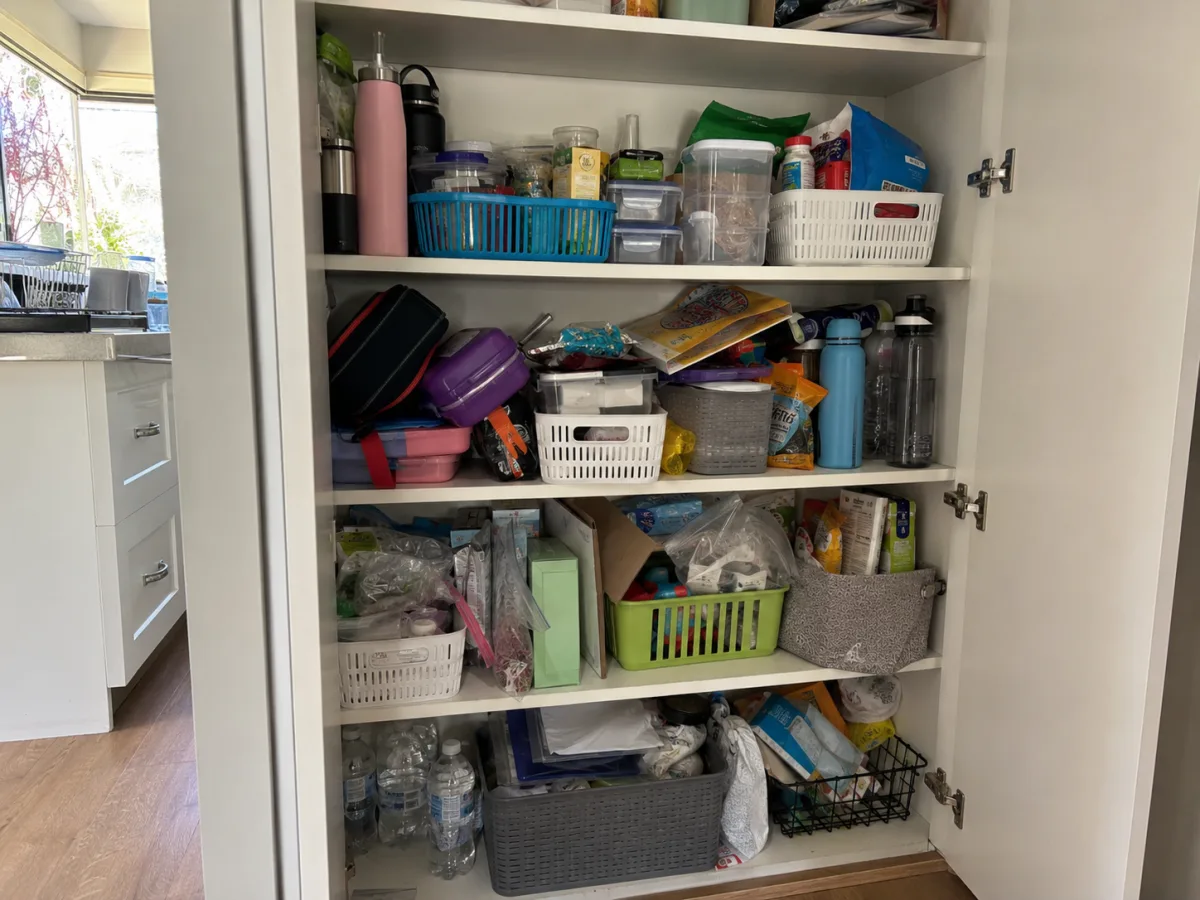
You open a cupboard, and everything seems to tumble forward at once. Water bottles lean against lunch boxes, spare cables hide behind old batteries, and one storage basket contains absolutely nothing useful. So you decide it is finally time to get organized. The answer seems simple: buy a few clever containers, sort everything into neat sections, and enjoy the calm, tidy home you have been promised.
That sounds sensible, but there is a catch. Organizing products are still products, and they take up space too. A new basket may hide a messy pile, but it does not automatically reduce what you own. A rack can make twelve bottles look prettier, yet you still have twelve bottles. Before long, the house can be full of things designed to hold other things, while the original clutter quietly remains.
Real organization is not about making every shelf look like a showroom. It is about making daily life easier. You should be able to find what you need, put it back without effort, and move through your home without constantly shifting piles around. If your organizing system adds more objects, more steps, and more work, it may not be solving the problem at all.
When Organizers Become the Clutter
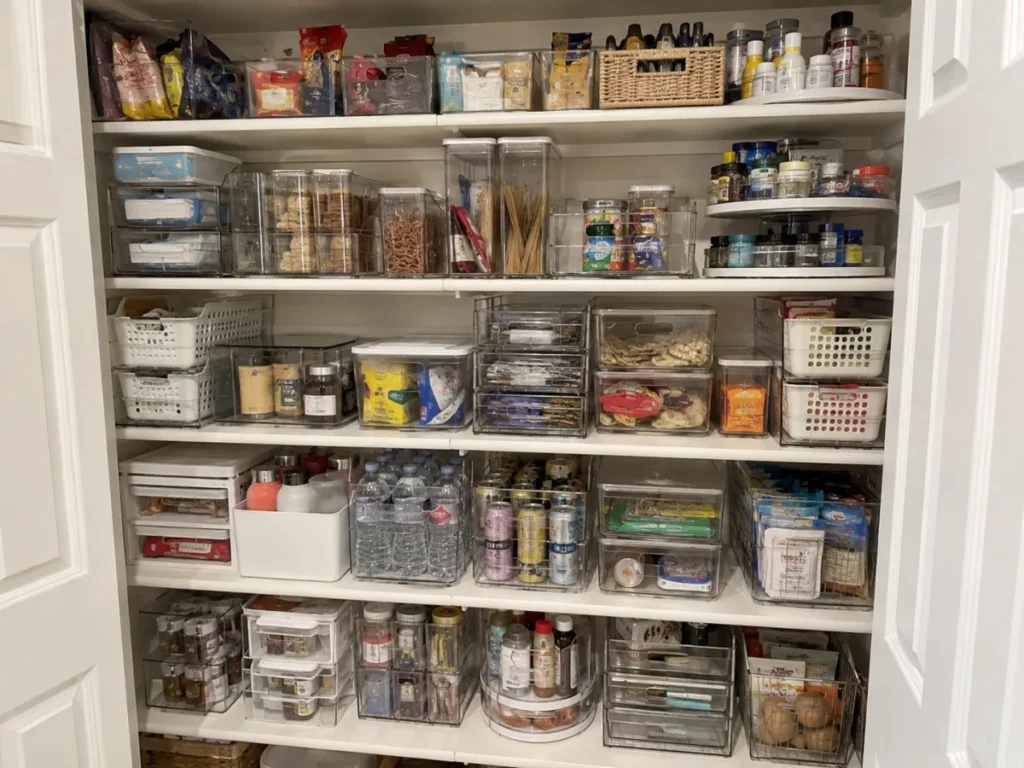
Some organizing tools are useful. A cutlery tray keeps forks from wandering into the wrong drawer, and a simple basket can stop cleaning products from falling over. Trouble starts when every category in your home suddenly seems to need its own special organizer. You can now buy holders for water bottles, snack bars, pan lids, batteries, cables, cosmetics, shoes, spices, and almost anything else you own.
At first, these products can make a messy space look neat. Matching containers line up beautifully, labels face forward, and everything seems to have a proper place. But look closer. You still own the same amount of stuff. In some cases, you now own even more because every group of possessions has gained an extra piece of plastic, metal, or fabric around it.
That is where organizing can quietly turn into clutter. You are no longer just storing batteries; you are storing a battery organizer too. You are not simply keeping snacks in a cupboard; you are arranging them inside smaller containers. The question is not whether an organizer looks clever. Ask whether it genuinely makes your home easier to use. If it only makes clutter prettier, it may be another thing to manage.
The Hidden Job Behind a Tidy Home
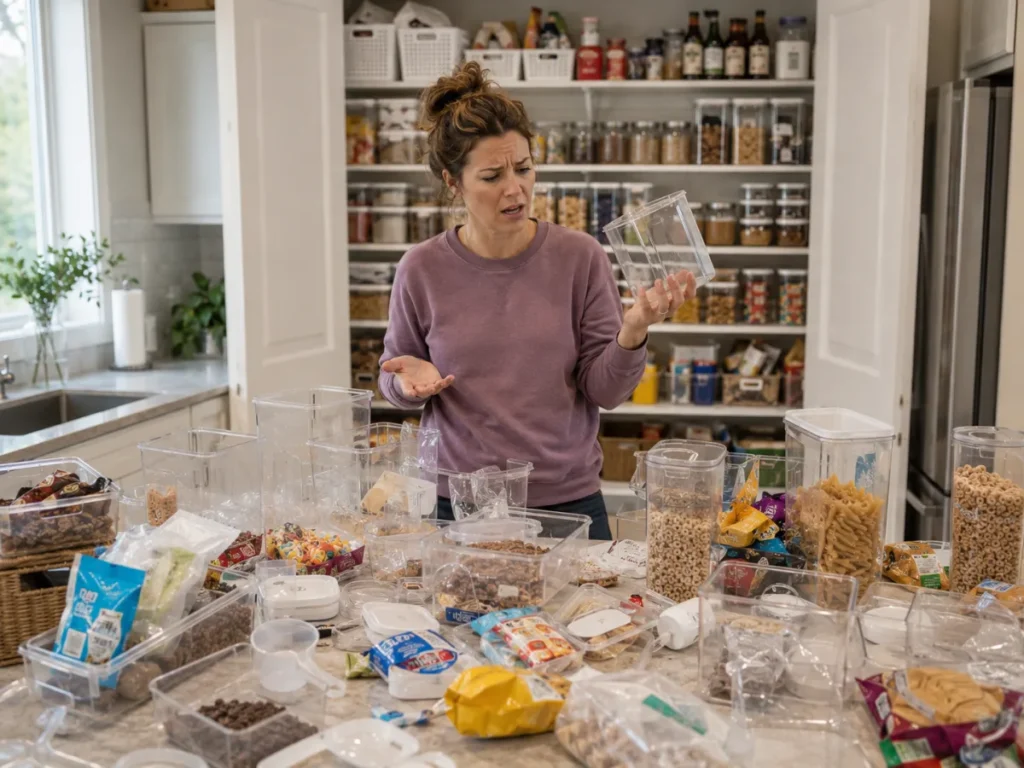
The biggest problem with complicated organizing systems is not always the space they use. It is the maintenance they demand. Clear pantry containers look great when they are full, but somebody has to empty packets into them, wash them, refill them, and remember what belongs where. A beautifully divided drawer works perfectly until you are busy, tired, or trying to put everything away in five minutes.
Baskets can create the same problem. At first, they give random items a quick home. Then one basket becomes the place for receipts, batteries, screwdrivers, spare keys, charging cables, and mysterious objects nobody wants to throw away. You have technically hidden the mess, but you have not really organized it. You have simply moved clutter into a nicer-looking box.
A useful system should reduce effort, not create another household job. Before adding anything new, ask yourself how much work the system will require next week, next month, and six months from now. Will you actually keep refilling tiny containers or sorting every cable into its exact slot? If the answer is not, keep things simpler. The best system is usually the one you can maintain on an ordinary day without thinking about it.
Tip 1 — Declutter First, Organize Second
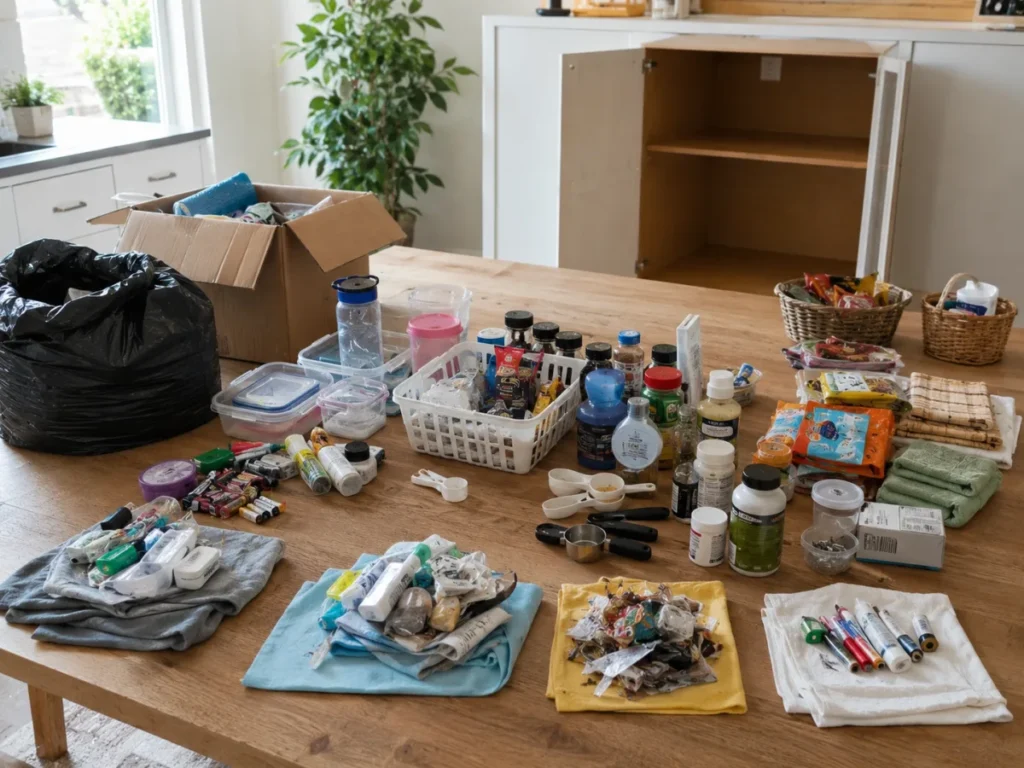
The first real solution is simple: remove things before you organize them. When a cupboard feels chaotic, resist the urge to buy another basket. Take everything out instead. Look at what you actually use, what you have forgotten about, and what has been sitting there untouched for months. You may find duplicates, broken items, expired products, and things you simply do not need anymore.
This matters because storage cannot solve an excess problem. A bigger box only gives you more room to keep things. A clever rack may make twenty items easier to see, but you still have twenty items to manage. Once you remove what no longer earns its place, the space often becomes easier to organize without buying anything. Suddenly, the shelf you thought was too small may be perfectly adequate.
Try using a simple order: declutter first, organize second, buy storage last. Only shop for an organizer if the things you keep genuinely need one. That small change can save money and stop you from building another layer of clutter around your clutter. The goal is not to own the perfect container. It is to have fewer things competing for your time, attention, and space every day.
Tip 2 — Make Putting Things Away Easy
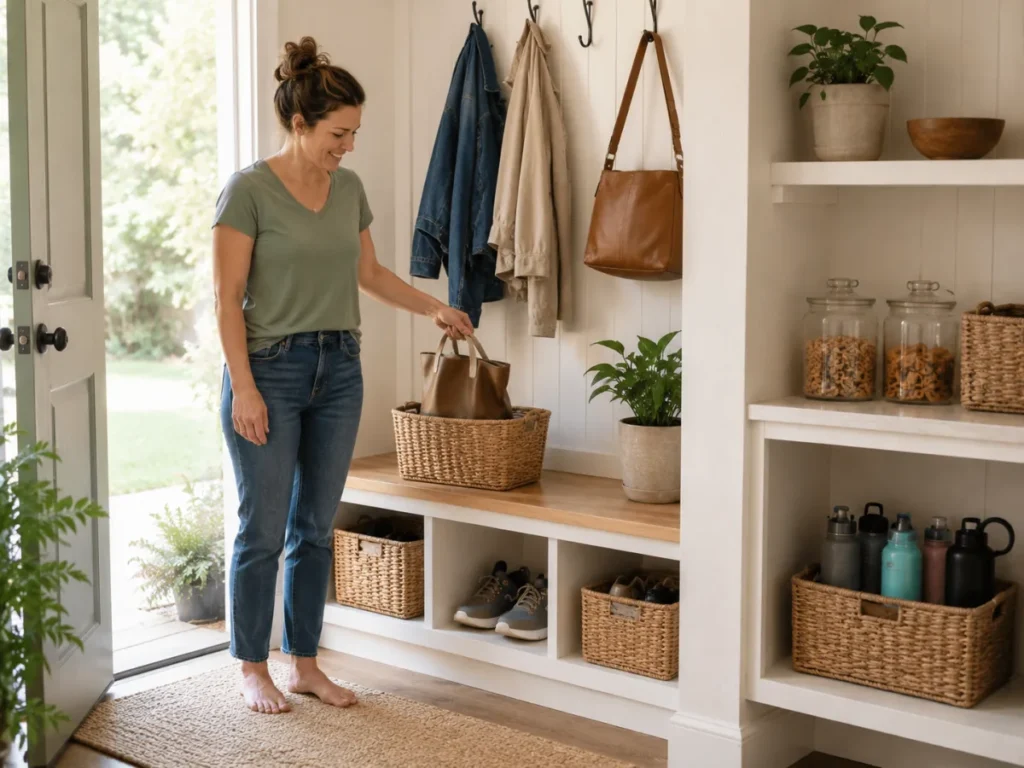
The second solution is to make putting things away easy. Your home should work with your habits, not against them. If shoes always end up beside the front door, give them a home there. If you use kitchen tools every morning, keep them within reach. The less effort required to return something to its place, the more likely you are to do it.
This is where simple storage really beats elaborate systems. An open basket can be better than a box with a lid. One drawer may work better than six compartments. A basic shelf can be more useful than a stack of containers. You do not need objects hidden, labeled, or arranged perfectly. You need a system that works when you are busy, and the house is not camera-ready.
Think of organization as a shortcut, not a display. Good storage should help you find things quickly, use them easily, and put them away without turning cleanup into a project. If a system needs constant effort to stay perfect, simplify it. The best-organized home is not necessarily the prettiest one. It is the one that feels easy to live in and easy to reset after a messy day.