
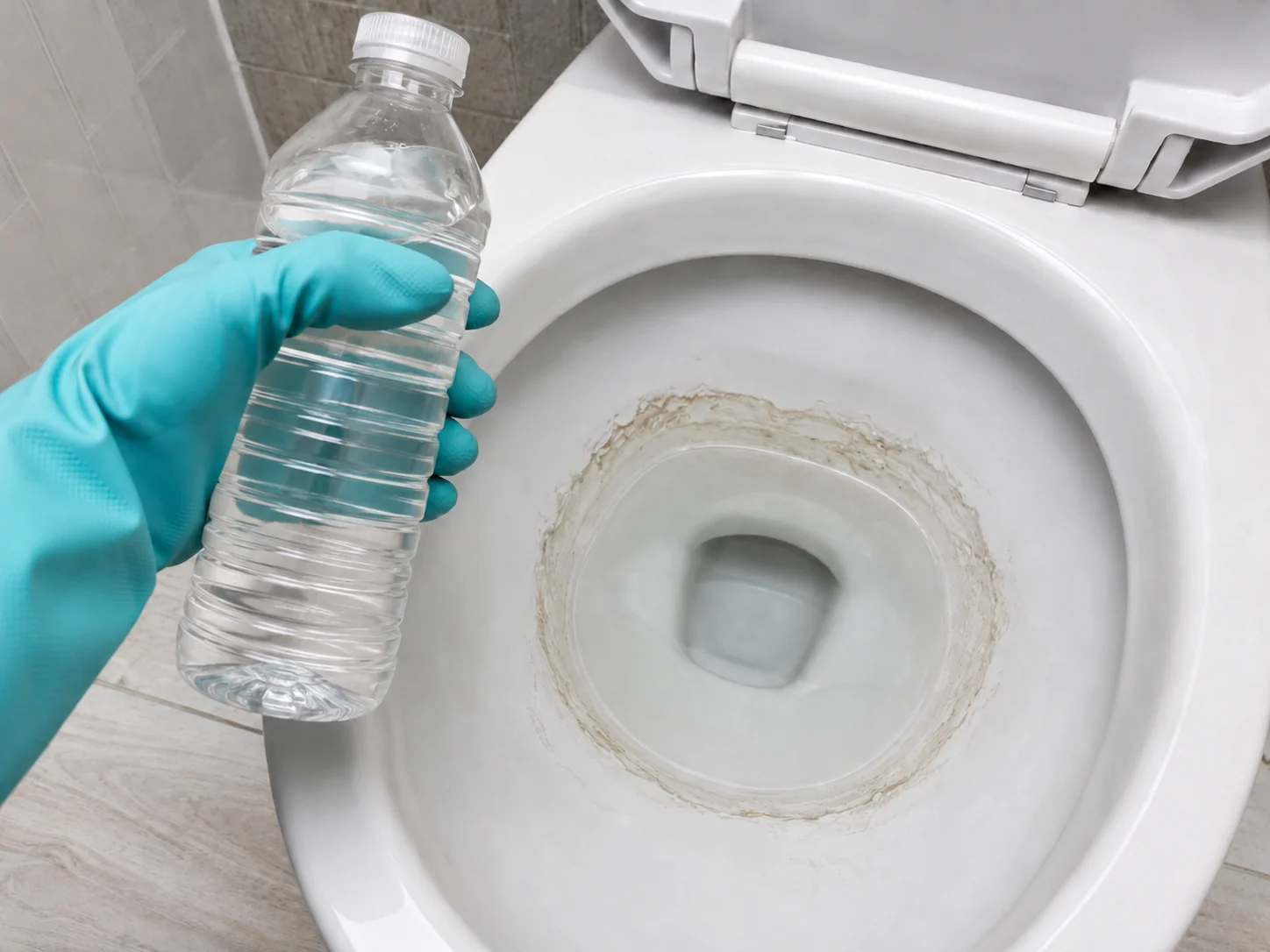
A clean toilet should not feel like a weekly battle, but for many people it does. You scrub, flush, spray, wait, scrub again, and still that dull ring at the waterline seems to stare back at you. The worst part is that the bowl can look “clean enough” from a distance while still having stubborn limescale, yellowish stains, or rough patches that trap dirt again almost immediately.
That is why vinegar is such a useful little helper in the bathroom. It is cheap, easy to find, and especially handy when the problem is not ordinary dirt, but mineral buildup from hard water. Instead of relying only on strong-smelling products, you can use vinegar to soften the deposits so they are easier to brush away. It is a quieter, slower kind of cleaning, but that is exactly why it works.
This trick is especially helpful if you hate bending over the bowl and scrubbing for ages. You are not trying to perform magic in ten seconds. You are simply giving the vinegar enough contact time to do the boring work for you. Once you understand that, toilet cleaning suddenly feels less hopeless and much more manageable every single week at home.
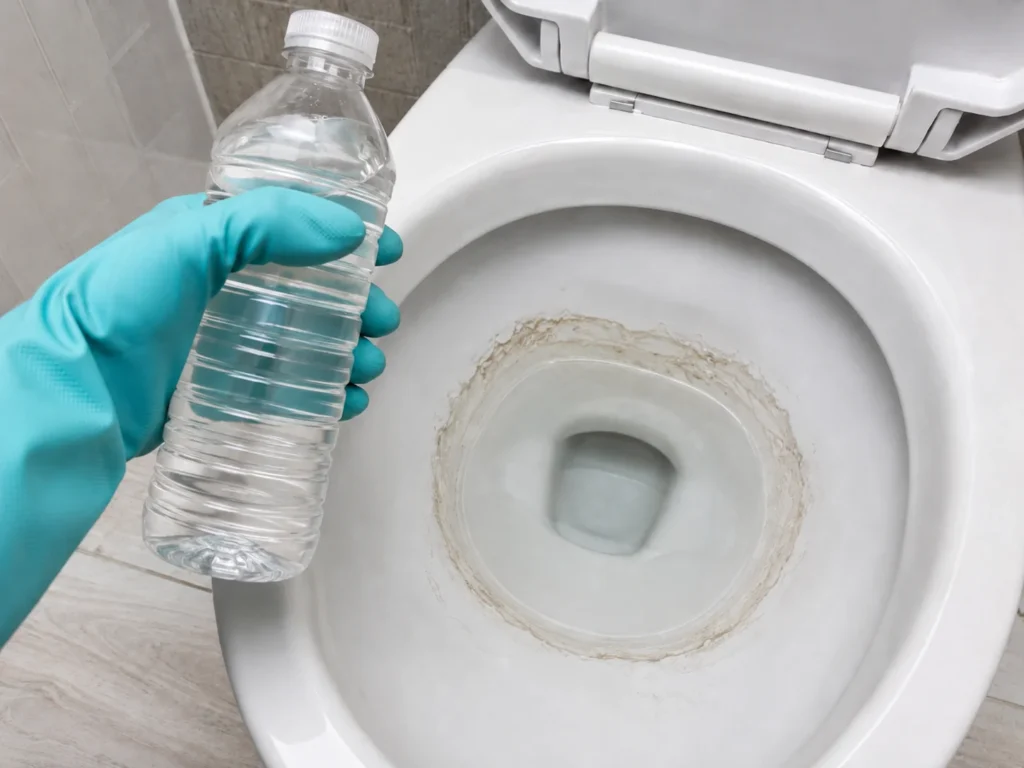
Before you start pouring random products into the toilet, it helps to know what problem you are actually trying to solve. A lot of toilet stains are caused by limescale. This is the chalky buildup left behind when water evaporates or sits in the bowl for a long time. Once dirt sticks to that rough layer, the toilet can look older and dirtier than it really is.
This is where vinegar comes in. Vinegar is acidic, which makes it useful against limescale. It does not replace proper cleaning forever, and it will not fix every stain in every toilet, but it can make mineral buildup much easier to remove. The key is contact time. If vinegar runs straight into the water and disappears, it has very little chance to help. That is why simply splashing some in the bowl often disappoints people.
The cloth method solves that problem. A vinegar-soaked cloth can sit directly against the stained area. Instead of sliding away, the vinegar stays where you need it: on the ring, patch, or line you want to clean. It turns a quick rinse into a targeted treatment that can save a surprising amount of effort later in the week.
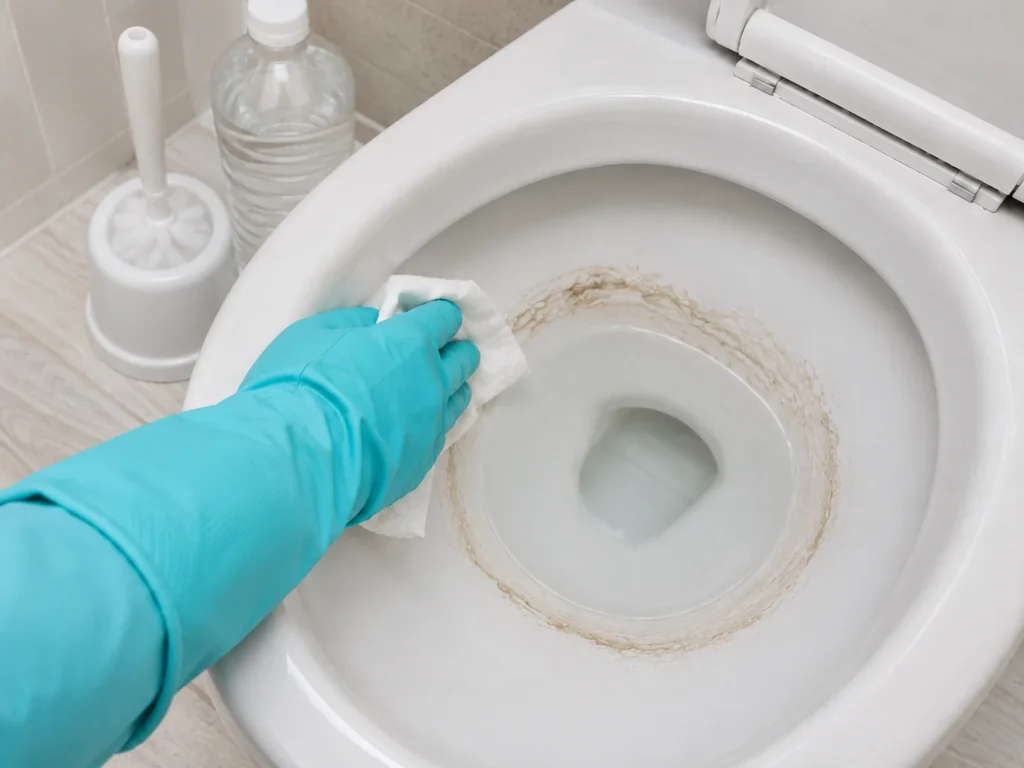
For the basic method, you only need cleaning vinegar or plain white vinegar, an old cloth or a few sheets of toilet paper, toilet gloves, and a toilet brush. Start by flushing the toilet so the bowl is wet but not filled with loose dirt. If the stain is high on the side of the bowl, you may want to gently press away some excess water first.
Soak the cloth with vinegar. It should be wet, but not dripping all over the floor. Then place it directly on the stained or chalky area inside the toilet bowl. If the mark sits around the waterline, press the cloth against that ring. For smaller patches, fold the cloth so it covers the exact spot. The goal is simple: keep the vinegar touching the stain.
Now leave it alone. That is the part many people skip, but matters most. Give the vinegar at least an hour to work. For stubborn buildup, leaving it overnight is often more convenient, as long as nobody needs to use the toilet during that time. Close the lid, leave the room ventilated, and let patience do the heavy lifting.
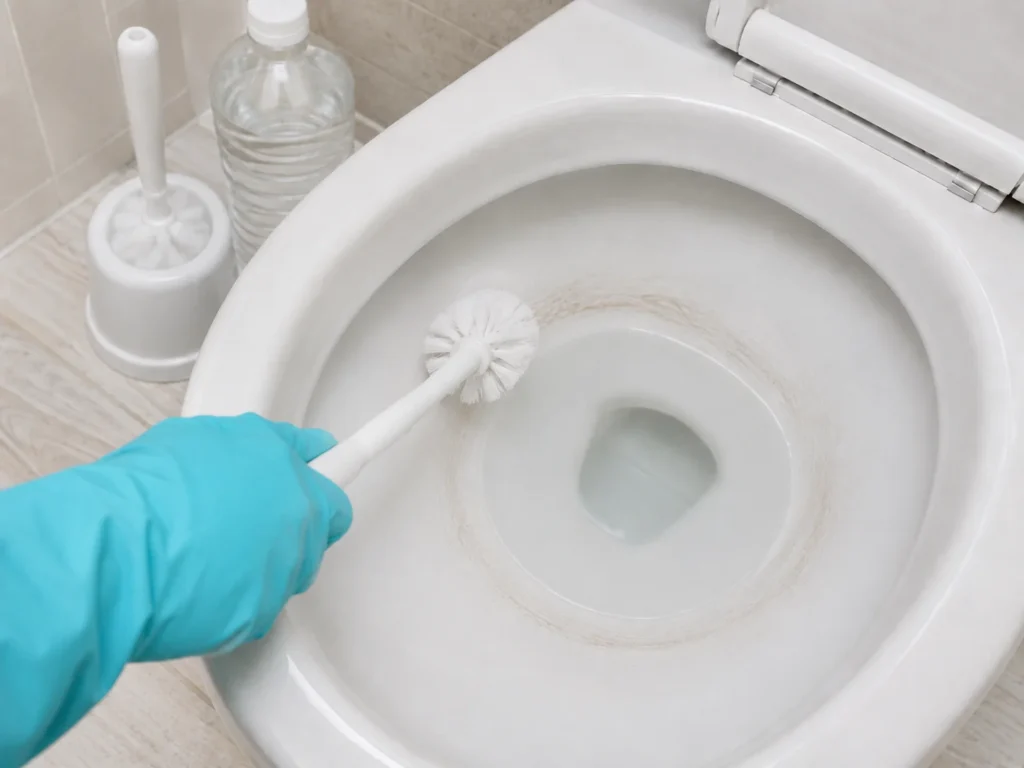
Once the vinegar has had time to work, put on gloves and remove the cloth before anyone uses the toilet. Do not flush the cloth, even if it looks small or thin. Put it in the laundry if it is reusable, or throw it away if you used disposable paper. Then take your toilet brush and scrub the treated area firmly.
You should notice that the rough layer is easier to loosen than before. If the stain has been sitting there for months, it may not vanish completely after one attempt. That does not mean the trick failed. It usually means the buildup is thick and needs a second round. Repeat the process rather than attacking the bowl with harsh force. Scrubbing harder is not always smarter.
After scrubbing, flush the toilet and check the result. If the bowl looks better but still has a faint ring, repeat the vinegar cloth method the next evening. Slow, repeated treatment is often less frustrating than one aggressive cleaning session that leaves you tired and annoyed. It also makes the job feel smaller. This is especially true in homes with hard water, where new deposits can build up quickly after every single flush.
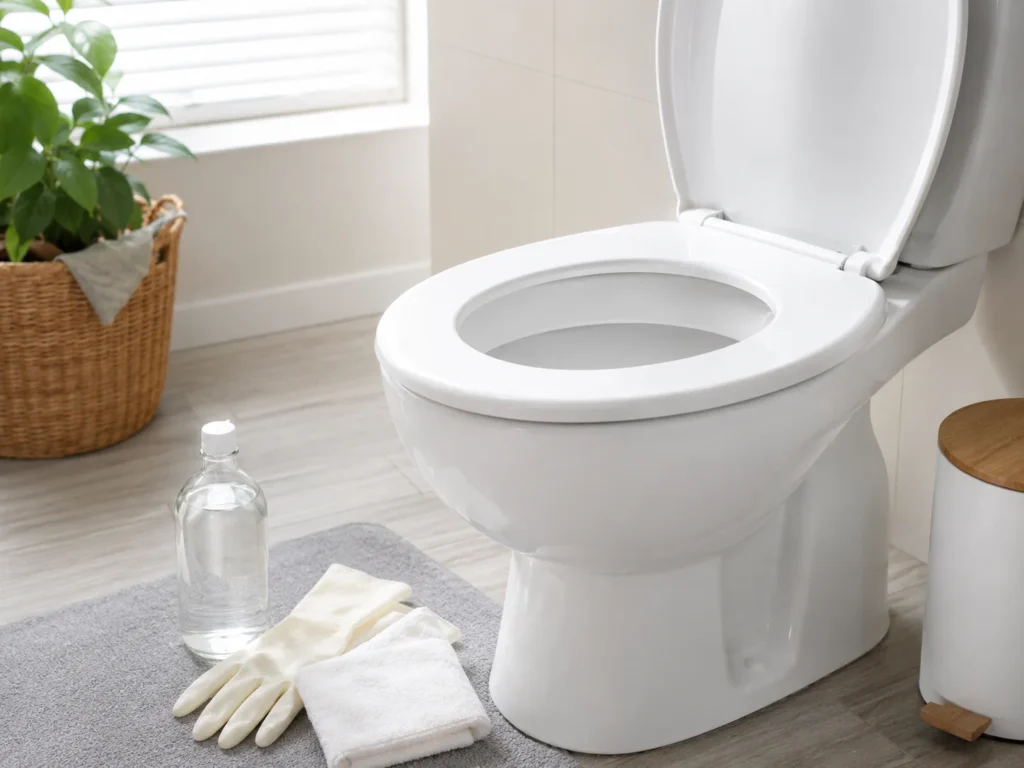
There are a few big mistakes to avoid. The biggest one is mixing vinegar with bleach or chlorine-based toilet cleaners. Do not do this. Vinegar is acidic, and bleach products should never be combined with acidic cleaners. If you recently used bleach, flush well, ventilate the room, and wait before using vinegar. When in doubt, do not mix products at all. One cleaner at a time is the safest rule.
Also, remember that vinegar is mainly useful for limescale. If the toilet smells bad because of poor ventilation, an old seal, or dirt around the floor and hinges, vinegar in the bowl will not solve the whole problem. Clean the seat, rim, outside, and floor area too, because smells often hide there. A fresh bowl helps, but the rest of the toilet matters as well.
Used the right way, though, vinegar is a simple and practical toilet trick. It is not glamorous, but it tackles a real household annoyance: stains that refuse to shift. With a soaked cloth, some patience, and a quick scrub afterward, your toilet bowl can look fresher without turning cleaning day into a full workout. It is a low-effort habit that can make regular cleaning easier.