
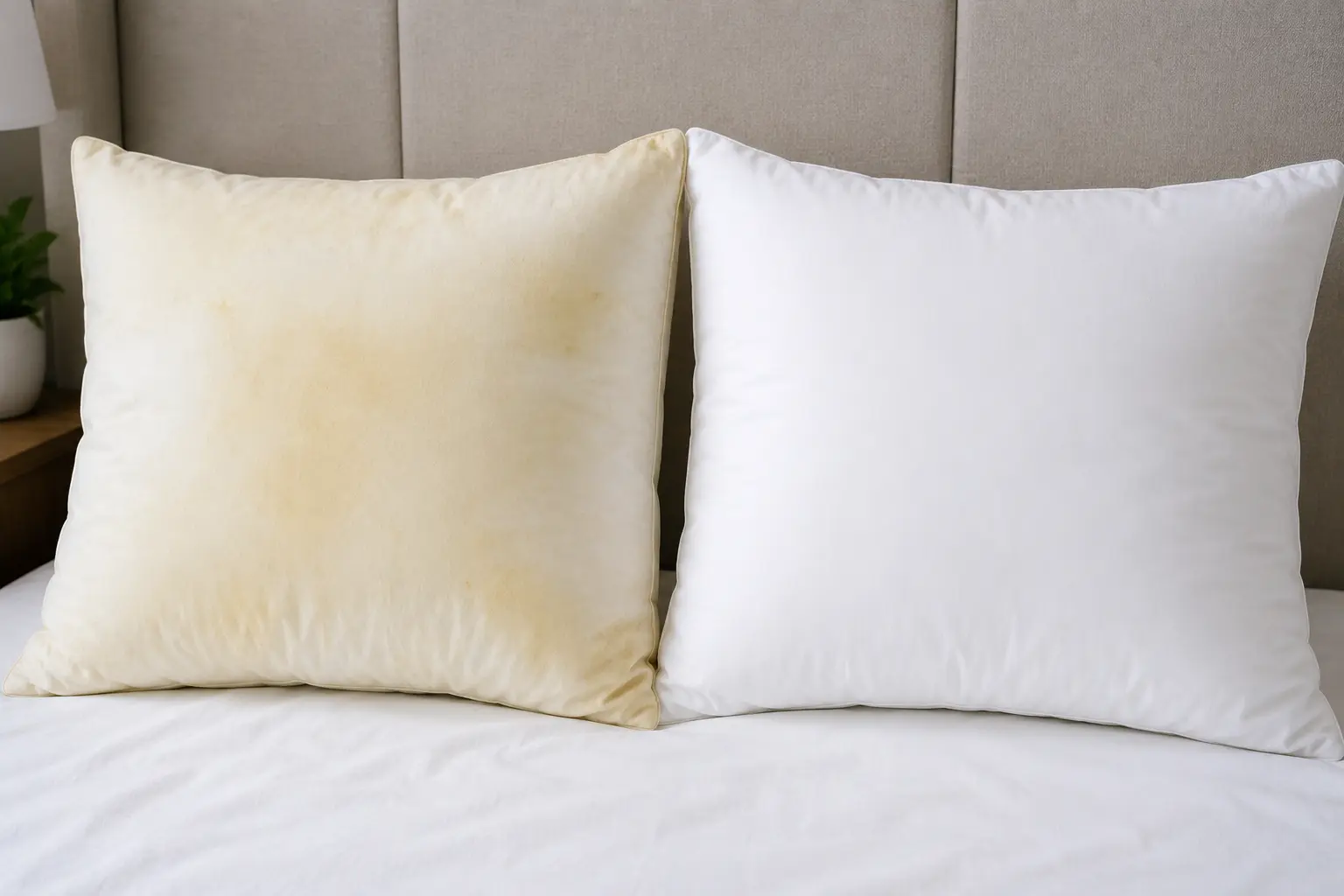
Brand-new pillows never stay white for long. At first, they look perfect. Bright fabric. Fresh smell. That soft, untouched look that makes an entire bed feel cleaner. But no matter how careful you are, the same thing eventually starts happening to almost every pillow. Slowly, the white begins to change. Not all at once. Not enough to notice day by day. Until one morning you strip the pillowcase off and suddenly realize the fabric underneath has turned yellow in places you swear weren’t there before.
And the frustrating part? It happens even in clean homes. Even to people who wash their bedding regularly. Because the stains usually aren’t coming from “dirt” in the way most people think. Night after night, pillows absorb sweat, body oils, damp hair, skincare products, and moisture that slowly sink deeper into the fabric over time. The pillowcase hides it for a while—but eventually, the buildup becomes impossible to ignore.
That’s usually the moment people assume the pillow is ruined. But cleaning experts say most yellow pillows aren’t actually beyond saving at all.
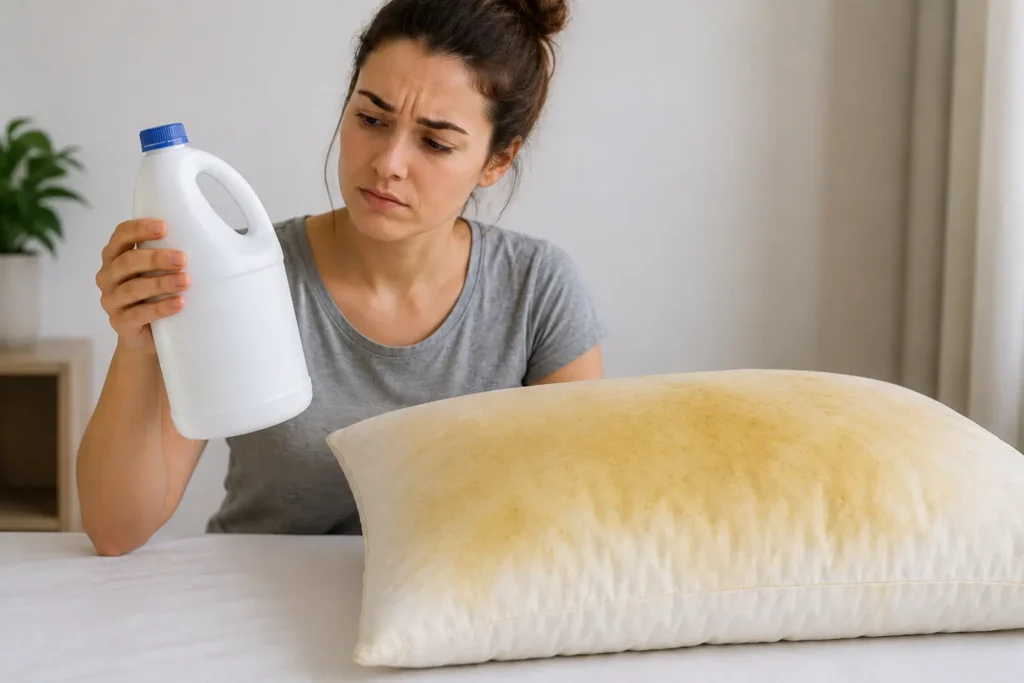
Most people try the obvious solution first. Bleach. And surprisingly, that’s often where things go wrong. Cleaning specialists warn that too much bleach can actually react with sweat and body oils in the fabric, making yellow stains look even darker over time. Some pillows even start developing stiff patches or uneven discoloration after repeated washes. That’s why many people have started switching to a different method entirely.
Instead of aggressively whitening the fabric, they focus on breaking down what’s trapped inside it first. The process usually starts with extremely hot water combined with ingredients people already have at home—things like baking soda, laundry detergent, or oxygen-based cleaners designed to lift oils from fabric instead of just masking the color. And the difference can be shocking. People who thought their pillows were permanently ruined often watch the water itself turn yellow during the soak. That’s usually the moment they realize the stains weren’t just “surface discoloration.”
The fabric had been holding onto years of buildup the entire time. But there’s one final step that makes the biggest visual difference of all.
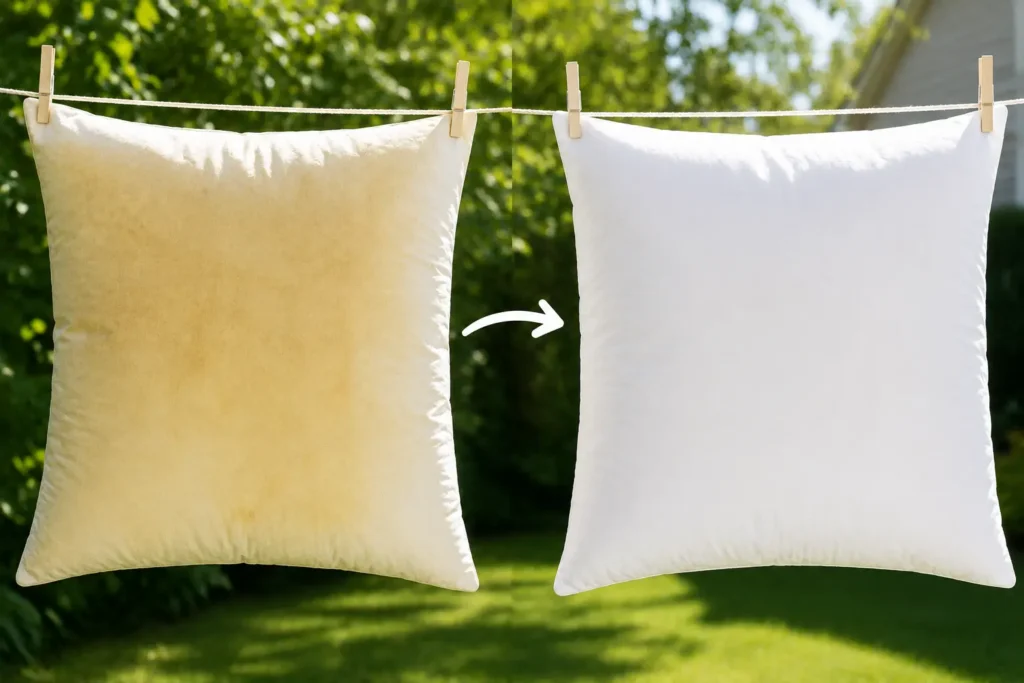
The real transformation happens during drying. Not washing. Drying. Because once the trapped oils and moisture are finally loosened from the fabric, the pillow needs airflow and heat to fully lift the remaining discoloration out. That’s why many cleaning experts recommend drying pillows in direct sunlight whenever possible. And almost immediately, the difference becomes obvious. The yellow tone fades. The fabric brightens.
Even the pillow itself starts looking newer instead of just “cleaner.” Some people even add clean tennis balls or dryer balls during the drying cycle to help restore the pillow’s shape while preventing damp spots from staying trapped inside. It sounds simple. But for many people, it’s the first time they’ve realized pillows can actually be restored instead of replaced. And once they see the water left behind after soaking them, they usually never look at pillows the same way again.
Because underneath those clean white pillowcases, most pillows are quietly absorbing years of sweat, oils, and moisture without anyone noticing. Until one day, the stains finally become impossible to ignore.