
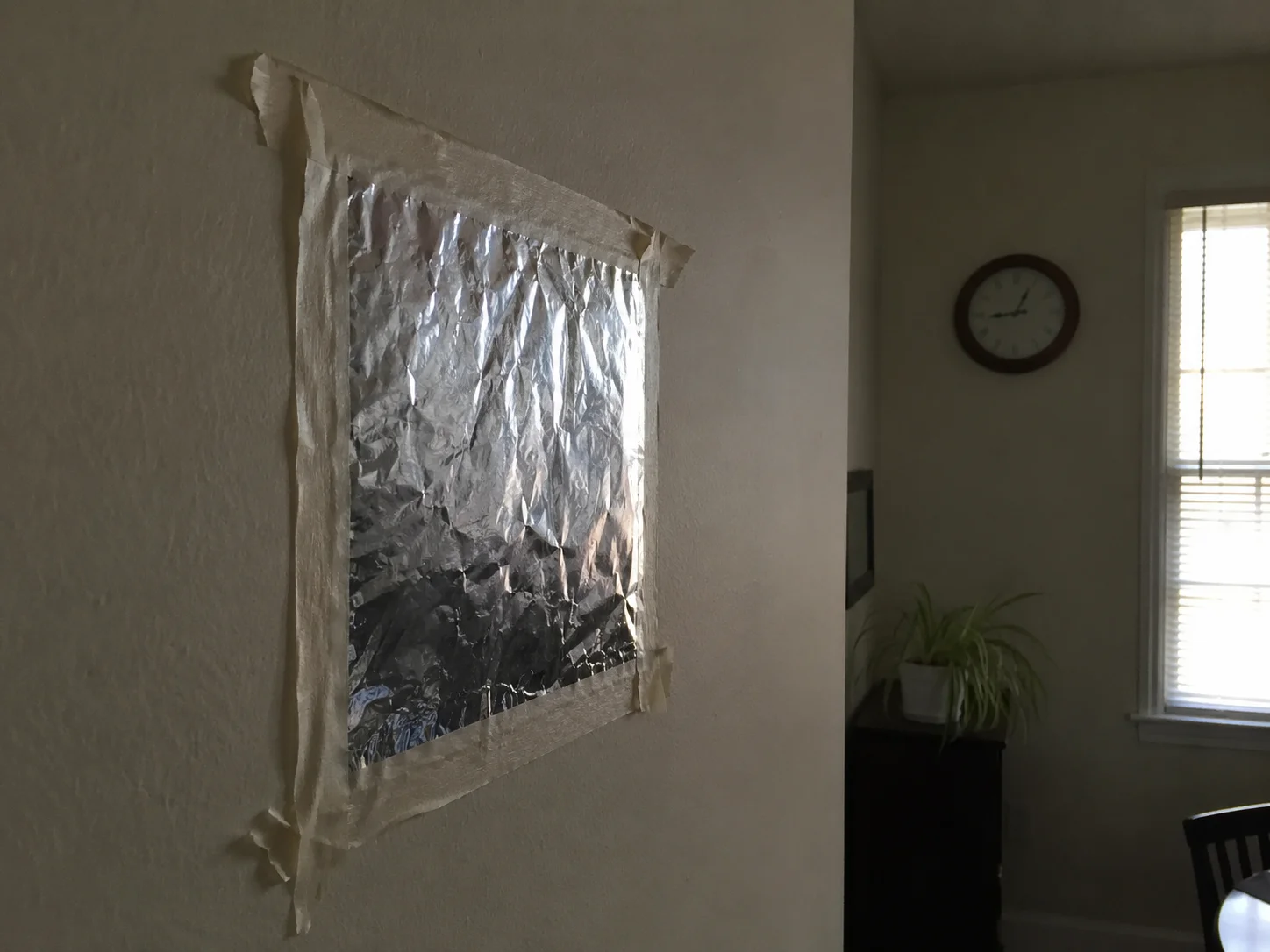
Aluminium foil is one of those things you probably use without thinking. You tear off a sheet, wrap up leftovers, cover a tray, or keep something warm for later. Simple enough. But lately, this everyday kitchen item has been showing up in a place where you would never expect it: taped flat against the wall.
It sounds like one of those odd internet hacks that makes you raise an eyebrow. Why would anyone press foil onto a wall and leave it there for a day or two? Even stranger, some home experts and architects have pointed people toward this trick because it can reveal something useful about a room without tools, meters, or other complicated equipment.
The clever part is that once you know what to look for, this strange little test suddenly makes a lot of sense. Read on to find out more…
Why Guessing Could Cost You
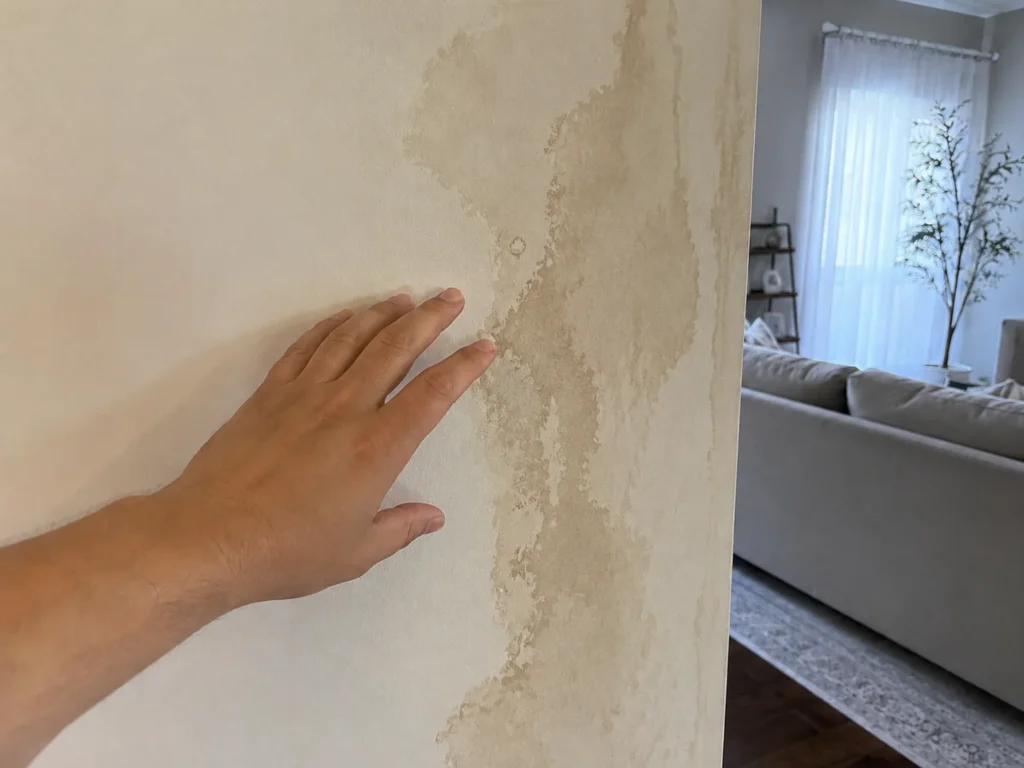
Most people react to a damp-looking wall in one of two ways. Some assume it is just everyday moisture from cooking, showering, drying laundry indoors, or cold weather. Others immediately fear the worst and imagine leaking pipes, cracked brickwork, or expensive repair bills. The frustrating part is that both reactions could be wrong.
The intriguing aluminium foil trick offers a simple way to slow down the guessing game before you start calling professionals, buying anti-mould paint, or breaking open a wall. You do not need special equipment, and you do not need to understand building science to try it.
All you need is a clean piece of aluminium foil, strong tape, and a little patience. However, you need to understand that this is not a miracle cure, nor magically remove stains. Instead, it will give you a small but useful clue about what your wall may be trying to tell you.
How The Foil Test Works
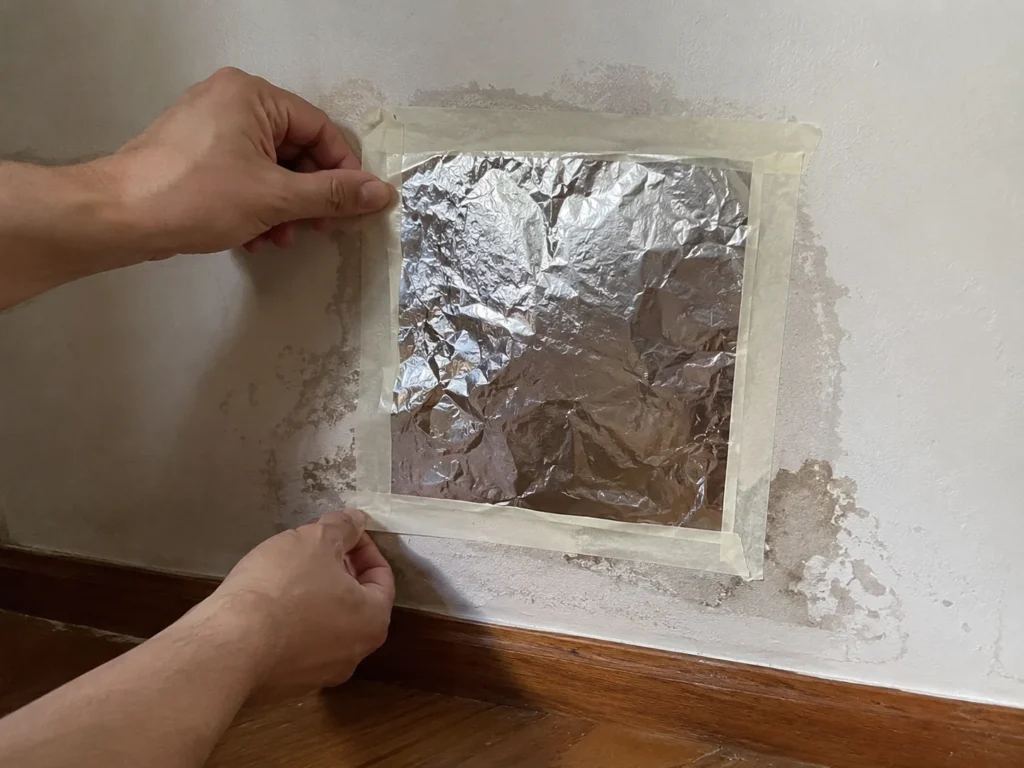
The first step is to choose the right spot. Look for an area where the mark keeps returning, where the paint feels slightly different, or where the wall looks darker than the space around it. Do not soak the area, scrub it aggressively, or cover it with cleaning products first. You want the wall to behave as naturally as possible.
Wipe the surface gently so it is dry to the touch. Then place a square of aluminium foil over the suspicious patch. It should be large enough to cover the mark properly, with a little extra space around the edges. Tape every side down firmly so air cannot easily move underneath it.
Then leave it alone for 24 to 48 hours. Peeking too early or lifting a corner can ruin the result. The foil needs time to trap the conditions around the wall, which is exactly why such a basic object can become surprisingly useful.
What To Look For
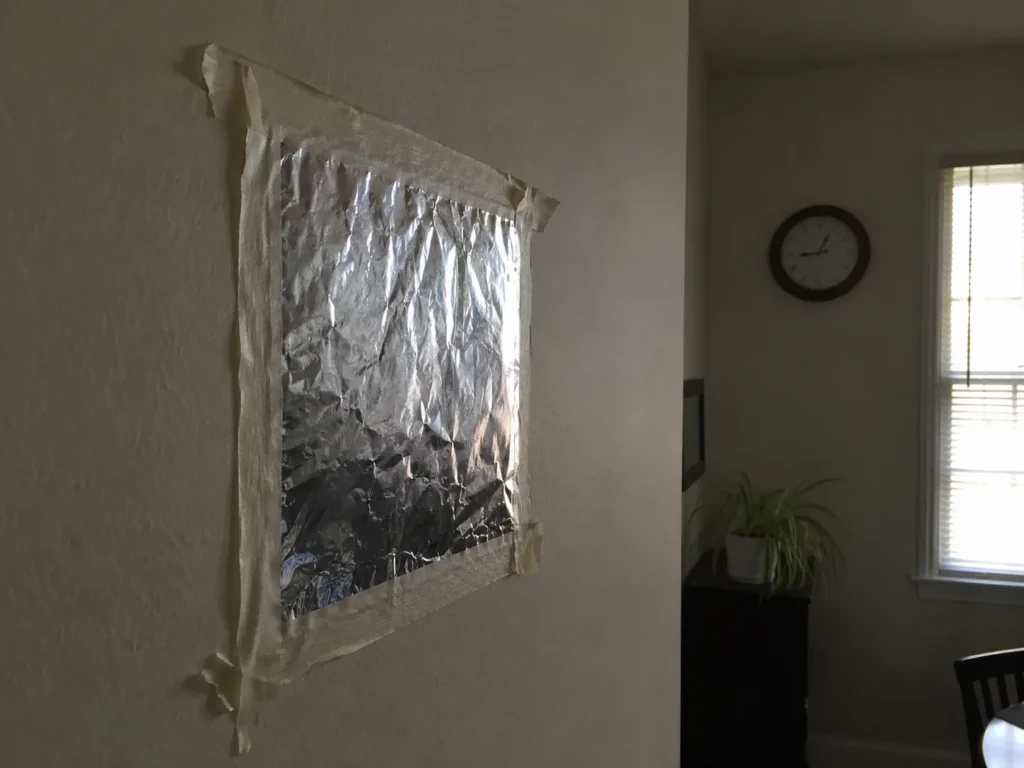
While the foil sits there, you are putting the wall to a small test. The airflow is blocked, and evaporation slows down. The patch can no longer dry the same way as the rest of the wall. Moisture at that part of the wall behaves differently, and that’s what you are looking for when the waiting time is over.
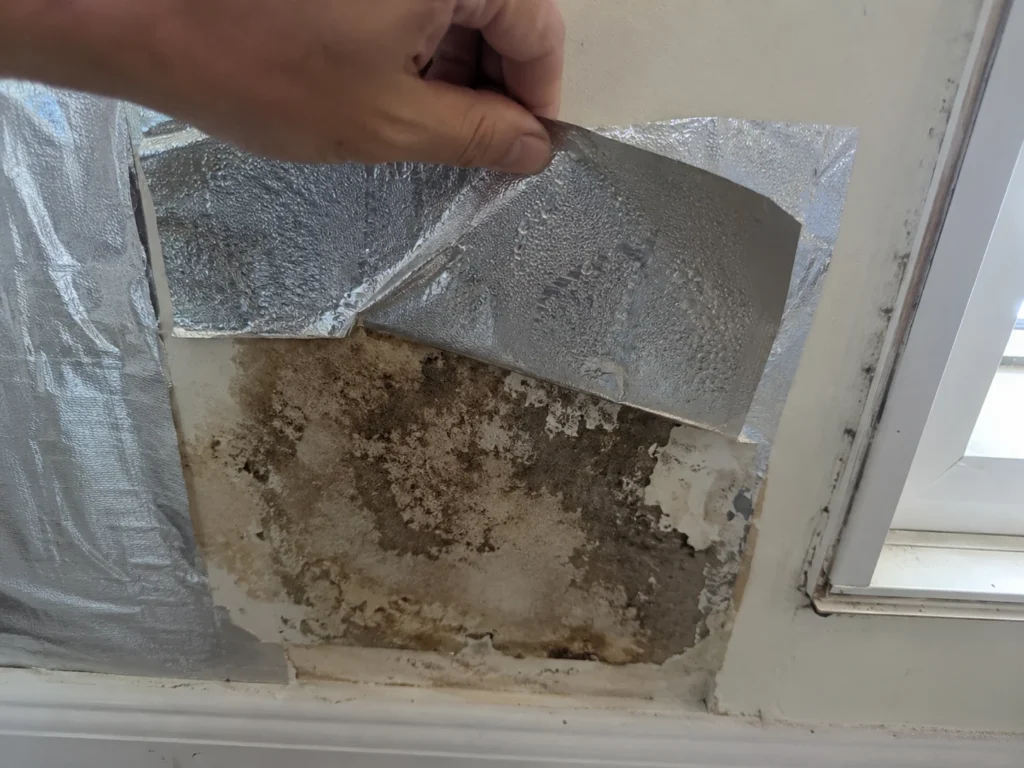
When you finally remove the foil about 48 hours later, do it carefully. Do not wipe anything yet. Look at the side of the foil facing the room. Then check the side that was pressed against the wall. Also, don’t forget to examine the wall itself before it dries again.
The foil will not solve the problem, but it may help you understand which problem you actually have.
What It Tells You
So what does an aluminium foil taped to the walls tell us? It can help show whether the moisture is coming from the room or from inside the wall. If the room-facing side of the foil is damp, the issue is often condensation. That means humid indoor air is hitting a cooler surface and turning into water.
If the wall-facing side of the foil is damp, the warning is more serious. That suggests moisture may be coming through the wall itself, possibly from a leak, seepage, cracks, gutters, drainage problems, or hidden plumbing. If both sides are wet, you may be dealing with more than one issue at once.
This simple trick is a quick way to decide what to do next. Condensation usually means improving ventilation, lowering humidity, and using fans or a dehumidifier. Moisture from the wall means you should investigate the source quickly before it can do more damage to the wall and probably the entire structure of your house.